Blog · Method ·

How we report results: dates, sources and limits on every number

The rules behind the figures in our case studies: equal windows, preliminary data marked, lower bounds named, clicks kept apart from orders, no visitor counts, and no cause claimed from a few days of data.

An open notebook with blank ruled pages, a wooden ruler and a pencil, next to a small kitchen scale holding one piece of salmon nigiri

The same search data can look better or worse depending on the dates and the measure you pick. Our case studies show numbers, so this note sets out the rules we follow when we publish them.

Every number carries its source and dates

Each figure names the service it came from, such as Search Console or GA4, and the dates it covers. When we compare, we compare equal windows: on September 28, 2026 we compared September 25–27 with September 22–24, three days with three days.

Recent data is marked

Google's search data for the most recent two or three days can still change. When a window includes those days, the page says so, for example "September 26–27 are preliminary". When the data is final, the page says that instead.

Counts are lower bounds, and terms are defined

Search Console leaves out searches it anonymizes for privacy, so when we write that a site held the #1 position for 40 queries, the true number may be higher. We define the terms where we use them: a query at #1 has an average position below 1.5, and the first page means an average position of 10 or better.

An average can hide where guests find a shop

An average position across every search mixes the searches guests use with rare, long searches far down the results. A site can sit near the top for the searches that matter and still show a middling average. So next to an average we also show counts, such as the number of queries at #1, and we name example queries: the most searched general ones first, never the restaurant's own name or a competitor's.

Clicks, not orders

Restaurant sites send guests to DoorDash, Grubhub, Uber Eats or ChowNow to order. We see the click that leaves the site, not the order that follows. So we write "people who clicked Order", not "orders", and we put no dollar value on a click.

No visitor counts

Raw visitor numbers include automated traffic, some of it from data centres, that no filter removes completely. On the sites we measure, we report actions instead, such as clicks to order or to call.

No before and after without a before

When a site's search data starts on the day we connect it, there is nothing earlier to compare, and we say so. When a new domain really does start from zero, as Cocobang's did on September 22, 2026, we give the registration date.

Timing is not cause

When numbers rise after a change, we write that the rise came after it. A few days of data cannot separate one change from everything else that moves search results: the season, a competitor, a new review, or Google itself.

We choose the measures, not the numbers

A case study has room for three figures, so we choose which true measures to show: a count of queries at #1 can say more than an average position, and a daily figure can show a new site's first days. Choosing the measure is our call. Every figure is the one the source reported for the dates beside it.

The rules, in short

  • Every figure names its source and dates.
  • Comparisons use equal windows.
  • Preliminary data is marked.
  • Counts that exclude anonymized searches are called lower bounds, and #1 and first page are defined.
  • Clicks toward an order are not called orders and carry no dollar value.
  • Visitor counts are not reported.
  • No before and after without data from before.
  • A rise after a change is described as timing, not cause.

These rules apply to the search and analytics figures in our case studies.

Case studies in this note.

  1. Glazed Korean fried chicken, tteokbokki and side dishes on a deep red table

    · Case study

    Cocobang: Seoul heat, San Francisco nights

    A website for a late-night Korean restaurant on a domain registered September 22, 2026. By September 26 Google was showing it 830 times a day, with the #1 position for 40 queries in the latest three days.

    Read
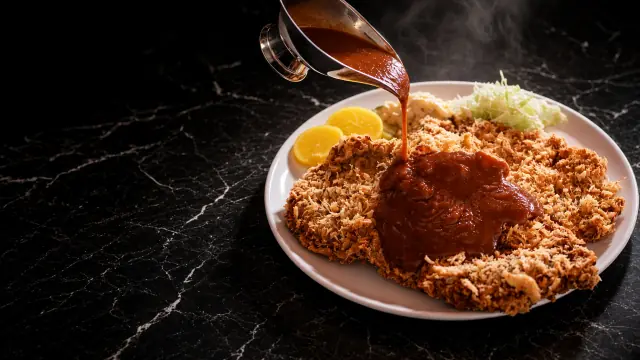
  2. King Katsu: a wide pork cutlet on a white plate, sauce being poured, on black marble

    · Case study

    King Katsu Land: three directions and the first search snapshot

    Three coded design directions for two locations, each with its own order links. From Sep 25 to 27, 62 people clicked Order: 34 for Daly City and 28 for Newark.

    Read
  3. A bento box and a cup of green tea on a table in a bright Japanese dining room with shoji screens

    · Case study

    Midori Sushi: a new look for 27 years of authentic sushi in Austin

    An Austin sushi restaurant established in 1999 and a searchable 210-item menu. Search impressions rose 65% from one three-day window to the next, and the average position moved from 10.4 to 8.5.

    Read
Start a project

Tell us what your business
needs right now.

From a single logo or business card to your brand and full website. Tell us your business name, the work you need and what you are trying to solve. In the free first consultation, we listen and suggest a scope and way forward. If you already know what you need, you can commission it directly. If you are unsure where to start, you can choose the Starting Diagnosis.

213-222-3086
Mik.Start a project
Which language would you like to use?

Choose the language you feel comfortable speaking.

Tell us about your business.

Business name and service area are enough.

An address, city or service area is enough.
What can we help you with?

A few lines are enough. We can work out the details together.

How can we reach you?

We’ll use these details to reply about your project.

Does everything look right?

You can go back and change any answer before sending.

We’ll use these details to review your project and reply by email.

Privacy & session analytics

We use Google Analytics to measure website visits and interactions. With your permission, we also use Microsoft Clarity to collect clicks, scrolling and masked session replays to improve this website. Clarity sends this usage data to Microsoft. Microsoft may use the data under its Privacy Statement, including to improve its products and provide Microsoft Advertising. Our integration requests analytics consent and denies advertising storage. Clarity cookies are disabled in this project. We do not send custom visitor identifiers or form values to Clarity.

You can decline session analytics or turn it off at any time. Browser Global Privacy Control and Do Not Track preferences are respected. This choice controls Clarity; it does not change the site's existing Google Analytics setup. Query-bearing visits and private pages are excluded from Clarity.

Microsoft Privacy Statement · Google Privacy Policy